

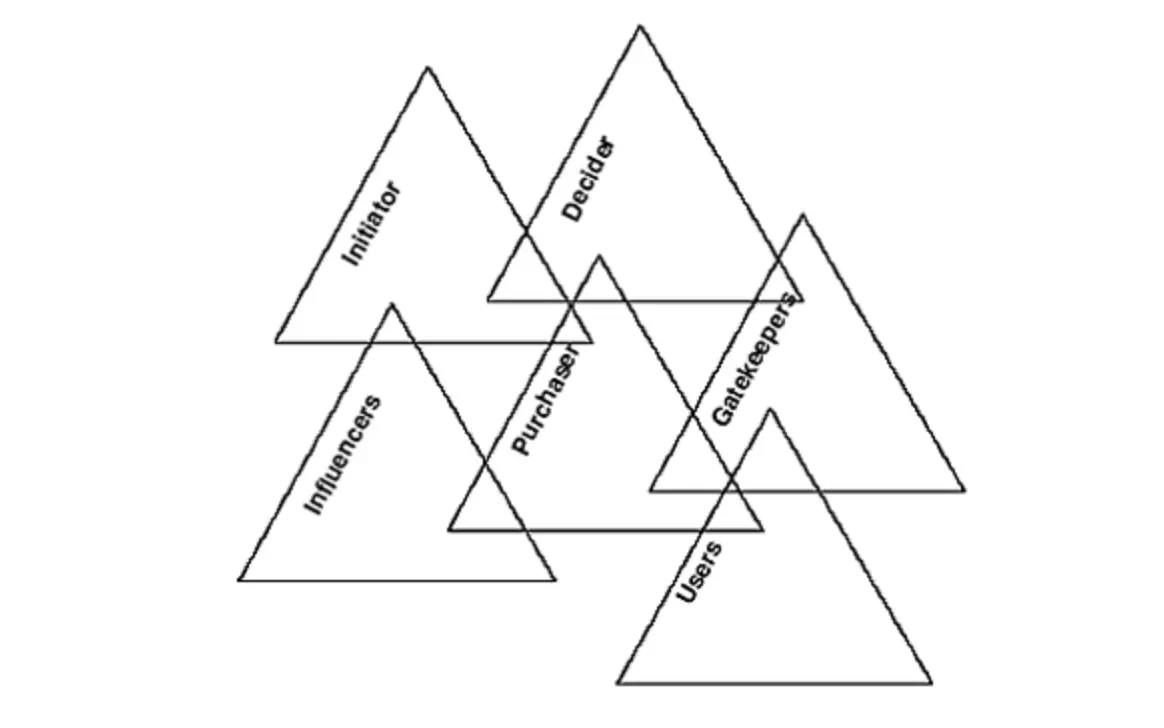
Let’s be honest: selling to a single decision-maker feels like a distant, almost mythical past. Today’s major B2B purchase? It’s a group project. A messy, high-stakes, politically-charged group project with 6 to 10 people—each holding a different piece of the puzzle and a different set of fears.
Your sales team isn’t just having a conversation; they’re navigating a committee. And without the right enablement, it’s like showing up to a board meeting with a crayon drawing. Here’s the deal: modern sales enablement must evolve from enabling a rep to win a deal, to enabling them to orchestrate a consensus across a diverse, often hidden, set of stakeholders.
Why Buying Committees Change Everything
It’s not just more people. It’s a fundamental shift in dynamics. You’ve got the Economic Buyer (CFO) worried about ROI and risk. The Technical Evaluator (IT lead) obsessed with security and integration. The End User (operations manager) who just wants their daily pain to stop. And let’s not forget the Executive Sponsor (VP) whose reputation is on the line.
Each speaks a different language. Each has a personal, often unspoken, success metric. Traditional sales collateral—a one-size-fits-all product brochure—doesn’t just fall flat; it actively creates noise. Your enablement strategy must equip reps to be multilingual consensus-builders.
Mapping the Committee: The First Critical Step
You can’t enable what you can’t see. The cornerstone of committee selling is stakeholder mapping. And I don’t mean just getting titles. Sales enablement must provide tools and frameworks for reps to uncover:
- Formal Roles vs. Informal Influence: Who has the official sign-off, and who actually sways opinion?
- Individual Pain Points: What keeps each person up at night? For the IT director, it’s data sovereignty. For the end-user, it’s clunky workflows.
- Success Metrics: How will each stakeholder measure victory? Is it time saved, risk reduced, revenue gained?
- Connections & Alliances: Who trusts whom? Where are the potential internal blockers?
Think of it as creating a living dossier. This isn’t a one-time exercise. It’s a continuous process that should be baked into the CRM and coaching conversations.
Arming Reps with Role-Specific, Just-in-Time Content
Once you map the terrain, you need the right supplies for the journey. A massive, generic content library is overwhelming. Enablement needs to be surgical.
This means creating and curating content assets tailored to specific stakeholder roles, and making them insanely easy for reps to find and deploy at the right moment. For example:
| Stakeholder Role | Content & Tool Focus | Delivery Format |
| Economic Buyer (CFO, VP Finance) | Business case templates, ROI calculators, risk mitigation frameworks, third-party analyst reports on TCO. | Clean, concise PDFs; interactive tools; short executive summary videos. |
| Technical Evaluator (IT, Security) | Technical whitepapers, detailed security audits, API documentation, integration guides, proof-of-concept checklists. | Deep-dive documents, linked to a technical resource hub, demo scripts for specific features. |
| End User / Champion (Ops Manager) | Process improvement case studies, “day-in-the-life” demo videos, quick-start guides, peer testimonials. | Visual, snackable content. Think short videos or one-page visual summaries. |
The key is context. A great enablement platform surfaces the CFO-focused ROI calculator just as the rep is preparing for that budget conversation. It’s about relevance, not volume.
Coaching for Consensus, Not Just Closure
This is where the human element—the art—really comes in. Sales managers can’t just ask, “Where are you in the pipeline?” They need to ask, “Walk me through the buying committee. Who’s with us, who’s on the fence, and who have we not met yet?”
Enablement must provide managers with coaching playbooks for complex deals. Role-playing shouldn’t just be a product pitch; it should be a practice in navigating a tough question from a skeptical legal counsel, or in helping a champion build their internal business case.
Teach reps to identify and empower internal champions. That champion is your guide through the internal politics—they need tools to sell on your behalf when you’re not in the room. Arm them with internal presentation decks and clear answers to common internal objections.
The Silent Killer: Ignoring the “Status Quo” Stakeholder
Here’s a quirk of human nature we often miss. In every committee, there’s often a powerful, silent stakeholder: the status quo. Change is scary. New processes are disruptive. Your sales enablement must equip reps to address this inertia head-on, not just the active competitors.
This means creating content that vividly paints the cost of inaction. What does not solving this problem cost the company in lost revenue, inefficiency, or competitive risk over the next 18 months? Give reps the narrative and the data to make “doing nothing” feel like the riskiest choice of all.
Leveraging Data & Signals for Smarter Engagement
Gut feeling isn’t a strategy. Modern enablement platforms can show you which content pieces are actually moving deals forward. Are deals where the security whitepaper is shared 30% more likely to advance? That’s a signal.
Even better, look at engagement data. If six people from a prospect company are downloading different role-specific content, you’ve likely identified your buying committee. Enablement should flag this for the rep: “Hey, looks like Legal and IT are actively researching. Time to tailor your next outreach.” It’s about connecting the digital body language to a concrete action.
The End Goal: From Sales Rep to Trusted Guide
Ultimately, sales enablement for multi-stakeholder committees is about elevating the rep’s role. They stop being a vendor and start becoming a facilitator of a complex decision. They provide the structure, the insights, and the clarity that the buying committee desperately needs but can’t create internally.
It’s a harder job, for sure. But when your team is equipped not just with product knowledge, but with the tools to map, understand, and guide a diverse group toward a common goal, you stop competing on features. You start competing on the quality of the buying experience itself. And in a crowded market, that’s the only real differentiator left.